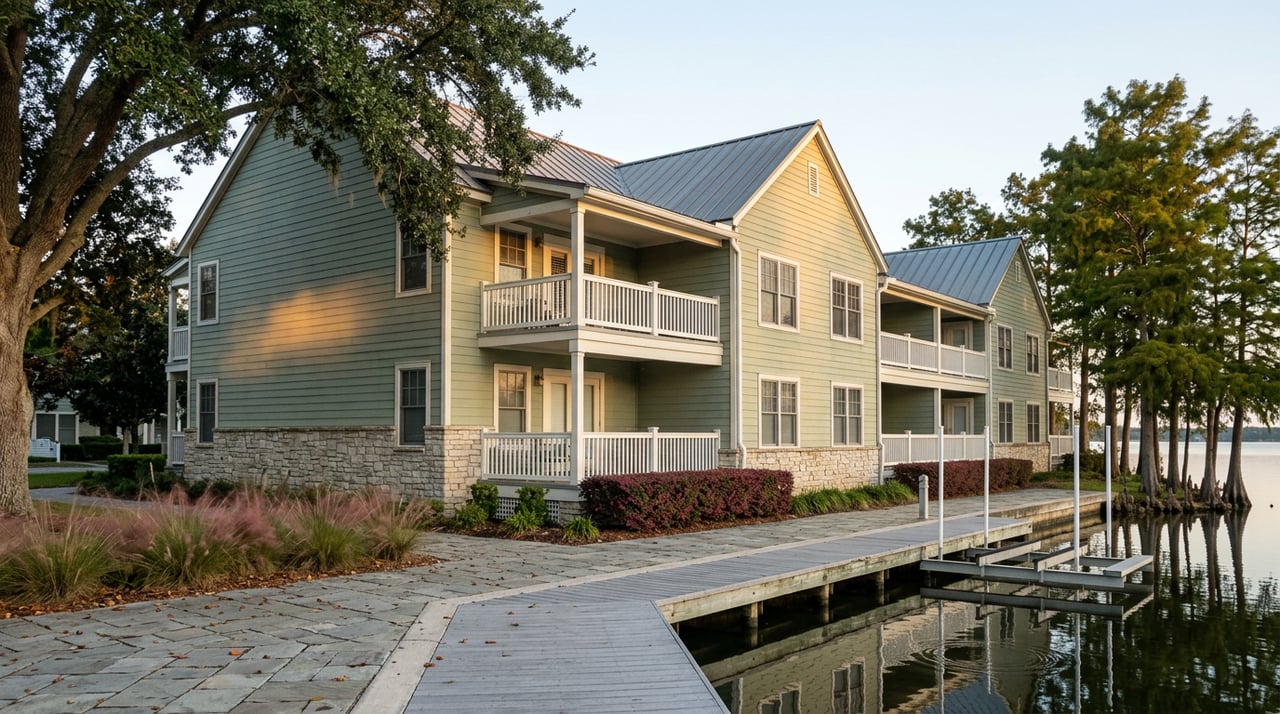
An investor calls about a waterfront condo in StillWaters. She has already checked Tallapoosa County's requirements. She assumes the path is clear.
Two buildings away, another owner just got a notice from their condo board about rentals. Same gated community. Same StillWaters Residential Association managing the roads and the gate. Two completely different answers to the same question, and the difference has nothing to do with the county.
The Permit You Don't Need
Start with what is actually true at the government level, because it matters and it is easy to misread. What the state does require is straightforward: Home Team Luxury Rentals says Alabama's lodging tax, currently 4%, applies to any rental under 180 consecutive days.
That is genuinely good news for anyone comparing Lake Martin to markets like Gulf Shores or Orange Beach, where cities require a business license and a Vacation Rental Certificate before you can legally list a property. Here, the government layer is thin. But thin does not mean absent. It means the real gatekeeper sits somewhere else, and if you only check the county, you have checked the wrong door.
Seven Associations, One Gate
StillWaters is governed at the top level by the StillWaters Residential Association, which handles the Main Gate on Highway 49, the Back Gate on Highway 34, road maintenance, and the Architectural Review Committee that signs off on construction and dock modifications. What SWRA does not do, at least not uniformly, is set one rental policy for the whole community.
According to SWRA's own published statistics, the association's management team oversees seven sub-associations within StillWaters in addition to the main homeowners association. Those sub-associations include condo communities like Harbor Pointe, Stoneview Summit, Villas on the Harbor, Sunset Point, and Crowne Pointe. According to Amy B. Cotney, rental rules, including whether nightly stays are allowed at all, vary among those individual associations.
This is not a theoretical concern. Buyers touring StillWaters with rental income in mind should verify the rules for the specific association. The same address on a map can carry different answers depending on which building you are standing in front of.
Local Note: When a StillWaters listing advertises rental income potential, the first document I ask for is not the county's records. It is the specific condo association's declaration and any amendments to it. That single document tells you more about your investment plan than anything the listing photos can show.
How the Covenants Got This Way
The fragmentation is not an accident of paperwork. It is the residue of a development history that never fully consolidated.
StillWaters began in the 1970s under developer Cecil Duffee and the Dadeville Lumber Company. By 1985, financial trouble forced a sale to a new developer, Coosa Resorts, which wrote what the community now calls the 1987 Covenants and created the StillWaters Residential Association to administer them. Coosa Resorts later ran into its own financial difficulties, and the Resolution Trust Corporation took over before selling developer rights to the Baptist Foundations of America in 1994.
BFA added real infrastructure, including a second golf course and a second gate, but it also inherited a governance problem: three different covenant sets were already in place across different phases of the community, and the maintenance fee revenue split across them was not enough to run things smoothly. In 1996, BFA drafted a sweeping new covenant called "Traditions" and campaigned to get residents to adopt it community-wide. The vote failed. Residents kept their existing covenants, and BFA proceeded to place several of its own properties under Traditions anyway, adding a fourth covenant framework rather than resolving the split.
That history is the reason a single unified rental policy never emerged. Decades of ownership changes and a rejected unification vote left StillWaters with a patchwork of governing documents instead of one rulebook, and that patchwork is exactly what an investor runs into today when different buildings answer the same rental question differently.
The Buildings Behind the Question
Here is what that patchwork looks like in practice, using the named associations most buyers encounter when shopping waterfront condos in StillWaters.
| Association | What it governs | What to verify before you buy |
|---|---|---|
| Harbor Pointe | Waterfront condo units near Harbor Pointe Marina | Its own declaration's rental minimums and any owner-occupancy requirements |
| Stoneview Summit | 85-unit condo community with pool and lakeside balconies | Whether current bylaws permit nightly or weekly rentals |
| Villas on the Harbor | Waterfront condos with deeded boat slips | Rental restrictions tied to slip usage and guest access |
| Sunset Point | Condominiums on the marina side of the community | Any minimum-stay language distinct from neighboring associations |
| Crowne Pointe | Renovated condo units within StillWaters | Current rental policy, since older declarations get amended over time |
Check the governing documents for the specific association before relying on rental income.
The Due-Diligence Sequence That Actually Protects You
If rental income is part of the plan, the order of operations matters more than the enthusiasm behind the offer.
- Identify which sub-association governs the specific unit, not just "StillWaters" as a whole. SWRA's condo association page lists the entities it manages, and that is the starting point.
- Request the current declaration and any amendments directly from that association, not from the listing agent's summary of it. Amendments are how rental policy changes over time, and an outdated copy can show permissions that no longer exist.
- Confirm the minimum stay length in writing.
- Check whether the unit's rental history, if the listing markets one, was actually compliant with the association's current rules or was operating under an older, since-amended policy.
- Separately confirm Alabama lodging-tax requirements with the state.
- Review the SWRA Gate Entrance Policy for guest access logistics if short-term turnover is part of your plan, since gate remotes and contractor windows affect how smoothly a rental business runs day to day.
What Skipping This Costs
The cost of skipping this sequence is not abstract. A buyer who closes on a condo assuming nightly rentals are allowed, based on a listing description or a general understanding of county requirements, may find after closing that the specific association's policy is different. Reversing that is not simple.
There is also a financing angle worth flagging early. Lenders classify loans differently based on rental intent, and a mismatch between what you told your lender and what the association actually permits can surface at the worst possible time, whether that is at closing or during a future refinance.
None of this makes StillWaters a bad choice for an investor. It makes it a community where the homework has to happen at the building level, not the zip code level.
A Few Questions Worth Asking Directly
Does SWRA itself restrict short-term rentals? Rental policies vary among associations, so verify the policy for the specific condo.
If one building allows rentals today, will it always? Verify the current policy for the specific property before relying on it.
Do single-family homes face the same patchwork? Check the governing documents for the specific property before buying.
If you are weighing a StillWaters purchase with rental income in the plan, the fastest way to get a straight answer is to have someone pull the right documents before you write an offer, not after. Lake Area Realty works StillWaters closely enough to know which association governs which building, and we would rather answer the rental question honestly now than watch a buyer discover the answer the hard way later. Schedule a Free Consultation and we will walk through the relevant documents for a specific unit before you get attached to a rental plan.
This article is general information, not legal, tax or financial advice. Consult a qualified professional about your situation.